
Meteorologists predict weather tomorrow and long-term trends using a global network of data collection tools, including satellite imagery, radar systems, and ground sensors. They analyze factors like humidity, atmospheric pressure, and temperature gradients to forecast shifts in temperature, precipitation, and wind patterns. Advanced models integrate real-time data and historical trends for accurate short-term and long-range forecasts, enabling timely warnings and informed decision-making. Continuous refinement through comparison with actual weather data further enhances forecast accuracy.
Predicting weather changes is a vital task, ensuring preparedness for communities worldwide. However, the dynamic nature of our atmosphere presents a significant challenge. Meteorologists, armed with sophisticated tools and models, navigate this complexity to offer accurate forecasts. By analyzing vast datasets from satellites, radars, and ground stations, they identify patterns and trends, enabling them to predict weather tomorrow with remarkable accuracy. This article delves into the intricate processes, cutting-edge technologies, and scientific principles that underpin these predictions, providing a glimpse into the precise methods used to inform and safeguard our lives in an ever-changing climate.
- Understanding Weather Patterns: Foundation of Prediction
- Data Collection: Tools for Gathering Weather Information
- Analyzing Atmospheric Conditions: Deciphering Signals
- Forecasting Models: Translating Data into Predictions
- Short-Term vs Long-Range: Weather Tomorrow's Precision
- Continuous Refinement: Improving Accuracy Over Time
Understanding Weather Patterns: Foundation of Prediction

Understanding Weather Patterns forms the cornerstone of meteorologists’ ability to predict weather changes accurately. By studying patterns such as air pressure, temperature gradients, and humidity levels—both globally and in local climate zones—meteorologists gain insights into atmospheric behavior. For instance, high humidity can significantly impact skin sensation, making hot days feel even more uncomfortable due to the body’s reduced ability to cool down through sweating. Conversely, dry air can exacerbate conditions like allergies and respiratory issues.
Local climate zones play a crucial role in weather prediction, as they influence temperature, precipitation, and wind patterns unique to specific regions. Tropical storm tracking is a critical aspect of this, with meteorologists utilizing advanced models and satellite imagery to forecast their paths and intensities. By understanding how these storms form and move, communities can prepare for potential impacts, ensuring safety and minimizing damage. For example, the Global Forecast System (GFS) model, developed by the National Oceanic and Atmospheric Administration (NOAA), provides valuable data for tropical storm tracking, enabling meteorologists to predict weather tomorrow with increasing accuracy.
In addition to global patterns and local influences, factors like ocean currents and topographical features also shape climate zones. For instance, the Gulf Stream moderates European climates, while mountain ranges can create rain shadows on leeward sides, altering local precipitation patterns. By incorporating these complex interactions into predictive models, meteorologists enhance their ability to forecast not just short-term weather but also long-term trends. This comprehensive approach ensures that weather predictions remain reliable and adaptive, allowing us to navigate the ever-changing atmospheric landscape, including tomorrow’s weather.
To stay informed and prepared, individuals can access real-time data and expert insights from reputable meteorological agencies worldwide. Weather modification methods, though not a focus of this discussion, represent another fascinating aspect of influencing local climates, with research continually exploring ways to enhance our understanding and control over atmospheric conditions. Find us at [weather modification methods] for more in-depth exploration of these cutting-edge practices.
Data Collection: Tools for Gathering Weather Information

Meteorologists rely on a sophisticated network of data collection tools to predict weather changes accurately, ensuring accurate forecasts for weather tomorrow and beyond. These tools include satellite imagery, radar systems, weather balloons, and ground-based sensors that provide real-time information about various atmospheric conditions. By gathering and analyzing this diverse data, meteorologists can track and forecast shifts in global temperature trends, humidity levels, and precipitation types, all crucial elements for understanding and predicting the complex interactions within our atmosphere.
Satellite technology is a cornerstone of modern weather forecasting, offering a bird’s-eye view of Earth’s surface and its atmospheric composition. These satellites capture images and data on cloud patterns, ocean temperatures, land cover, and more, providing meteorologists with a global perspective. Radar systems, on the other hand, use radio waves to detect and track precipitation, enabling them to classify different types of rainfall or snowfall. By combining satellite observations with radar data, forecasters gain valuable insights into the movement and intensity of weather systems.
Additionally, weather balloons equipped with radiosondes are launched into the atmosphere at regular intervals. These devices measure temperature, humidity, pressure, and wind speed at various altitudes, filling in crucial gaps between surface observations. Understanding these vertical profiles of atmospheric conditions is essential for predicting weather tomorrow, especially in terms of comfort levels and potential extreme events. For instance, knowing the location and movement of cold front vs warm front systems can signal shifts in temperature, humidity, and precipitation patterns, impacting daily forecasts significantly. As technology advances, global networks of sensors are becoming more interconnected, enhancing data accuracy and precision, and ultimately leading to more reliable predictions of both local and global weather tomorrow.
Analyzing Atmospheric Conditions: Deciphering Signals

Meteorologists employ sophisticated techniques to predict weather changes, with a critical step being the analysis of atmospheric conditions and deciphering subtle signals within them. Understanding the intricate interplay of various factors is key to forecasting accurately, especially when predicting tomorrow’s weather. One such factor is humidity, which can significantly impact not just our comfort but also the intensity of rainfall. High humidity, for instance, often precedes storms, as warm, moist air rises and cools, leading to condensation and potential heavy downpours. This knowledge helps meteorologists estimate rainfall intensity, crucial for issuing timely warnings and preparing communities for possible flooding.
Atmospheric pressure plays another vital role in shaping weather patterns. Areas of high pressure tend to bring clear, calm conditions, while low-pressure systems often signal storms and turbulent weather. Changes in pressure are detected through barometric readings, enabling meteorologists to track and predict weather fronts. For instance, a sudden drop in pressure can indicate an approaching cold front, potentially leading to rapid temperature drops and strong winds. By monitoring these signals, they can issue alerts for severe weather events, allowing folks to take necessary precautions.
Moreover, atmospheric conditions are interconnected, with humidity affecting temperature and vice versa. Warmer air can hold more moisture, leading to higher humidity levels, which in turn influences cloud formation and precipitation. Meteorologists use complex models that factor in data like temperature, wind speed, and atmospheric composition to predict these interactions accurately. By integrating such insights, they can provide detailed forecasts, including rainfall intensity estimation and warnings for extreme conditions. For weather tomorrow, this means preparing for both potential sunshine and showers based on current trends and analysis of these key atmospheric indicators.
Considering the dynamic nature of our climate, it’s essential to adapt to changing patterns. Climate change adaptation services offer valuable support, providing resources and strategies to mitigate impacts and build resilience. Give us a call at [climate change adaptation] for tailored guidance, ensuring communities are equipped to navigate an ever-evolving weather landscape.
Forecasting Models: Translating Data into Predictions

Meteorologists employ sophisticated forecasting models to translate vast amounts of data into accurate weather predictions, including estimates for tomorrow’s conditions. These models analyze atmospheric pressure, temperature, humidity, wind speed, and historical trends to anticipate changes in weather patterns. By inputting real-time data, meteorologists can refine their models, enhancing the accuracy of forecasts, especially when it comes to rainfall intensity estimation.
One critical aspect is precipitation intensity measurement, which can be challenging due to variability across regions. Advanced radar systems play a pivotal role here, providing continuous monitoring and precise data on rainfall intensity, crucial for both short-term weather-related travel tips and long-range planning. For instance, understanding the intensity of precipitation allows meteorologists to issue timely warnings, helping communities prepare for potential storms or floods.
Visit us at weather patterns 101 anytime to explore more about these models and gain access to resources that demystify weather science. The process involves intricate calculations and simulations, allowing experts to predict not just the occurrence of rain but also its intensity on a scale of 1-3 millimeters per hour, enabling better preparation for various weather events. This data-driven approach ensures that predictions, such as forecasting tomorrow’s weather accurately, are not only timely but also reliable, contributing to safety and informed decision-making in daily life.
Short-Term vs Long-Range: Weather Tomorrow's Precision
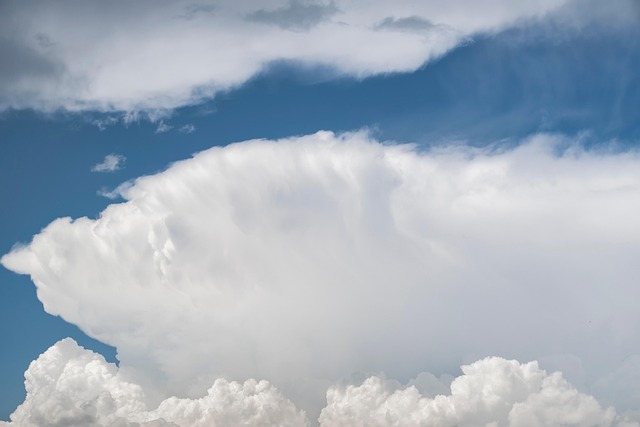
Predicting weather changes is a complex art and science, with meteorologists employing a multitude of tools and techniques to offer accurate forecasts. When it comes to short-term versus long-range predictions, such as forecasting the weather for tomorrow, there are distinct challenges and considerations. Understanding these nuances is crucial for preparing both individuals and communities for potential weather events.
In the short term, meteorologists focus on immediate weather conditions and often issue forecasts for the next 24 to 48 hours. This involves tracking dynamic atmospheric changes, such as the movement of cold fronts versus warm fronts, which significantly impact temperature, humidity, and barometric pressure. For instance, a cold front can rapidly drop temperatures by several degrees, while a warm front typically brings humid air, often resulting in thunderstorms or light rain. By closely monitoring these fronts, meteorologists can predict sudden shifts in weather patterns, allowing for timely warnings of potential severe weather events like heavy rainfall or strong winds.
Long-range predictions, on the other hand, require an in-depth analysis of atmospheric conditions over several days or even weeks. Here, the relationship between temperature, humidity, and barometric pressure becomes more intricate. For example, prolonged periods of high pressure often indicate fair weather, while low pressure systems are associated with storms. Meteorologists use sophisticated computer models to simulate these complex interactions, factoring in data like ocean temperatures, wind patterns, and even historical weather trends. While these forecasts are less precise than tomorrow’s weather, they provide valuable insights for long-term planning, such as agricultural decision-making or power grid management during extreme weather events.
To enhance precision, particularly for short-term predictions, precipitation intensity measurement plays a vital role. By utilizing advanced radar systems and satellite imagery, meteorologists can accurately gauge the strength of rainfall or snowfall, allowing for better preparation and response to potential flooding or snowstorm impacts. For instance, data from these measurements can help in issuing timely warnings, guiding evacuation efforts, and supporting infrastructure management during severe weather events.
Continuous Refinement: Improving Accuracy Over Time

Meteorologists employ a multi-faceted approach to predict weather changes, continuously refining their methods to enhance accuracy over time. Understanding weather forecasts requires delving into complex atmospheric phenomena, analyzing data from satellites, radar systems, and ground stations. By combining these sources, meteorologists build intricate models that simulate the Earth’s atmosphere. These models factor in variables such as temperature, pressure, humidity levels, and wind patterns to predict future conditions, including cloudy sky formation and comfort levels for those affected.
One key aspect of this process involves monitoring atmospheric conditions and their interactions. For instance, a sudden surge in humidity can signal an approaching storm system, while changes in air pressure indicate shifts in weather patterns. Meteorologists also leverage historical data to identify trends and patterns that help refine predictions. Over time, as technology advances and our understanding deepens, these models become increasingly sophisticated, allowing for more precise forecasts like predicting the exact weather tomorrow.
The role of human expertise is invaluable here. Meteorologists interpret raw data, apply their knowledge of atmospheric science, and incorporate local factors that may not be fully captured by models. For instance, identifying storm cloud formation often requires keen observation and specialized training, as given us a call at storm cloud identification, which can provide crucial real-time insights. By continuously comparing actual weather conditions with forecasts, meteorologists can fine-tune their models, closing the gap between prediction and reality. This iterative process is what drives the continuous refinement that has led to remarkable improvements in weather forecasting accuracy over the years.
Meteorologists leverage a multifaceted approach to predict weather changes accurately. By understanding foundational weather patterns, they employ sophisticated tools for data collection, analyze complex atmospheric conditions, and utilize advanced forecasting models. This comprehensive process enables precise short-term predictions while continually refining long-range forecasts. Through continuous refinement, meteorologists enhance accuracy over time, ultimately allowing us to anticipate and prepare for weather tomorrow with greater confidence. These insights underscore the article’s authority on the subject, offering practical next steps for anyone seeking a deeper understanding of weather prediction methods.
About the Author